Traditional Sankranti Recipes 2026: Til Ladoo, Pongal, and Regional Sweet Delicacies
As India celebrates Makar Sankranti on January 14, 2026, kitchens across the country are filled with the aroma of traditional sweets and delicacies th...
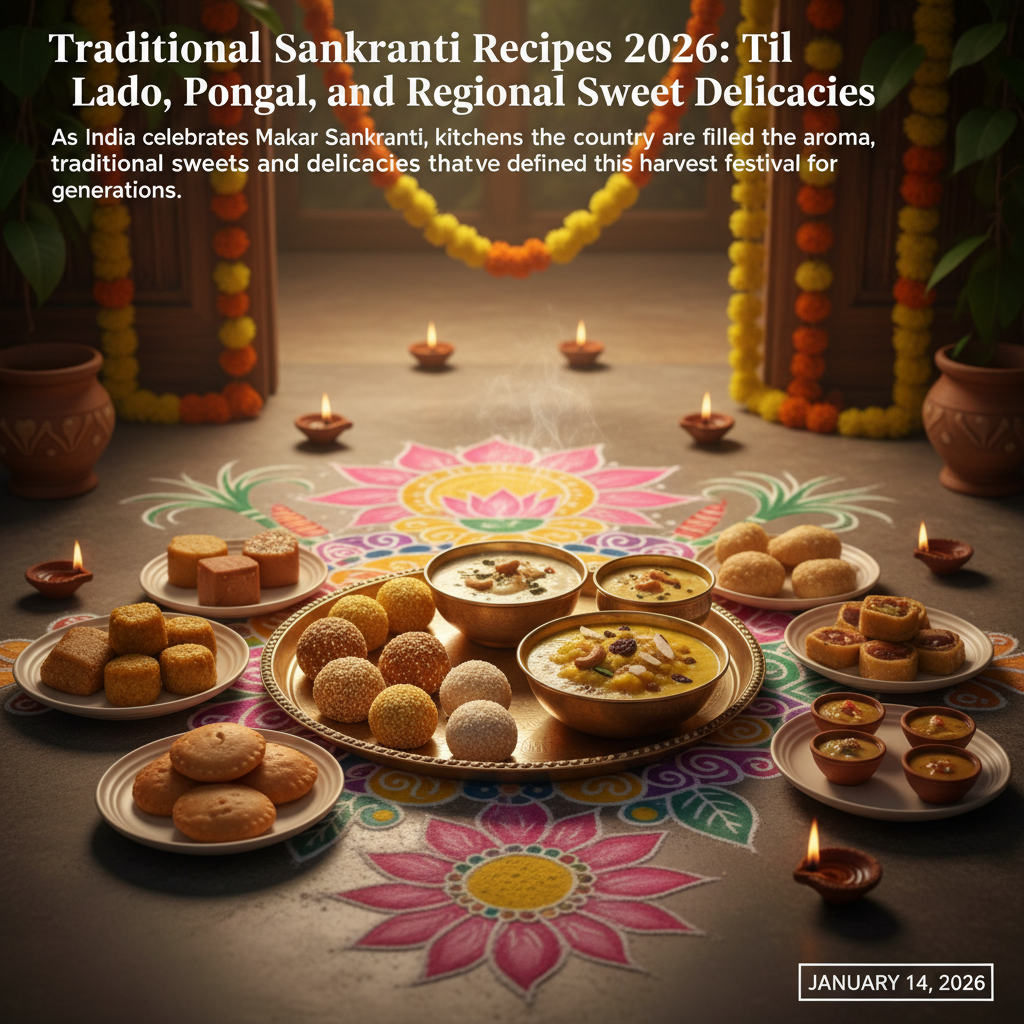
As India celebrates Makar Sankranti on January 14, 2026, kitchens across the country are filled with the aroma of traditional sweets and delicacies that have defined this harvest festival for generations. The festival, which marks the sun's transition into Capricorn and the beginning of the harvest season, brings with it a rich culinary heritage that varies beautifully across different states.
The undisputed star of Sankranti celebrations is til ladoo, the sesame seed and jaggery confection that embodies the festival's spirit. In Maharashtra, families exchange these golden-brown spheres with the traditional saying "Tilgul ghya, god god bhola" which translates to "have sesame-jaggery sweets and speak sweetly." The choice of ingredients is far from arbitrary, as sesame seeds generate warmth in the body during winter months, while jaggery provides instant energy and helps combat seasonal ailments like joint stiffness and low immunity.
Preparing authentic til ladoo requires patience and precision. The sesame seeds must be dry roasted on low heat for four to five minutes until they turn light golden brown and release their nutty fragrance. The traditional method involves boiling jaggery into a syrup until it reaches soft ball consistency, then mixing in the roasted seeds and shaping them into small spheres while still warm. Some modern variations incorporate peanuts, desiccated coconut, and cardamom powder for added flavor and texture.
In Tamil Nadu, the four-day Pongal festival running from January 14-17, 2026, centers around sakkarai pongal, the sweet rice dish that gives the festival its name. Made from freshly harvested rice, milk, jaggery, and ghee, this dish is traditionally cooked in a new clay pot outdoors to acknowledge the vital role of sunlight, land, and rain in agriculture. When the pot boils over, families joyously shout "Pongalo Pongal" as the overflow symbolizes abundance and prosperity for the coming year. Cardamom, cashews, and raisins add aromatic richness to this ceremonial dish.
Karnataka celebrates with ellu bella, a popular sweet trail mix combining groundnuts, roasted gram, desiccated coconut, and sesame seeds. The state also prepares elaborate spreads featuring payasa, holige, and numerous avarekalu preparations that showcase the region's culinary diversity. In Gujarat, the festival table includes undhiyu, a winter vegetable medley, alongside sesame and peanut chikki, the brittle-style sweets that provide satisfying crunch and sweetness.
North India's contribution to the Sankranti feast includes khichdi, the comforting rice and lentil preparation enriched with ghee that represents balance and simplicity. West Bengal offers patishapta, delicate sweet crepes stuffed with coconut, khoya, and date palm jaggery that have become inseparable from the region's Makar Sankranti celebrations. Other popular treats across regions include coconut ladoos made with condensed milk, besan ladoos prepared with gram flour and ghee, and murmura ladoos featuring puffed rice bound with jaggery.
The symbolic significance of these foods extends beyond taste and nutrition. As one tradition notes, jaggery represents not just sweetness in flavor but sweetness in behavior and speech. Til generates bodily heat necessary during winter's chill, while khichdi embodies the balance and harmony that the festival celebrates. These recipes, passed down through generations, connect modern celebrations to agricultural traditions that sustained communities for centuries.
Whether preparing the classic til ladoo of Maharashtra, the sacred pongal of Tamil Nadu, or regional variations from across India, these traditional recipes transform simple ingredients like sesame, jaggery, and newly harvested rice into expressions of gratitude for nature's bounty and hopes for continued prosperity throughout 2026.