Maghi 2026: Devotees Brave Cold to Take Holy Dip at Punjab's Sacred Gurdwaras
Tens of thousands of Sikh devotees converged at gurdwaras across Punjab and Haryana on January 14, 2026, to mark Maghi with ritual baths in sacred sar...
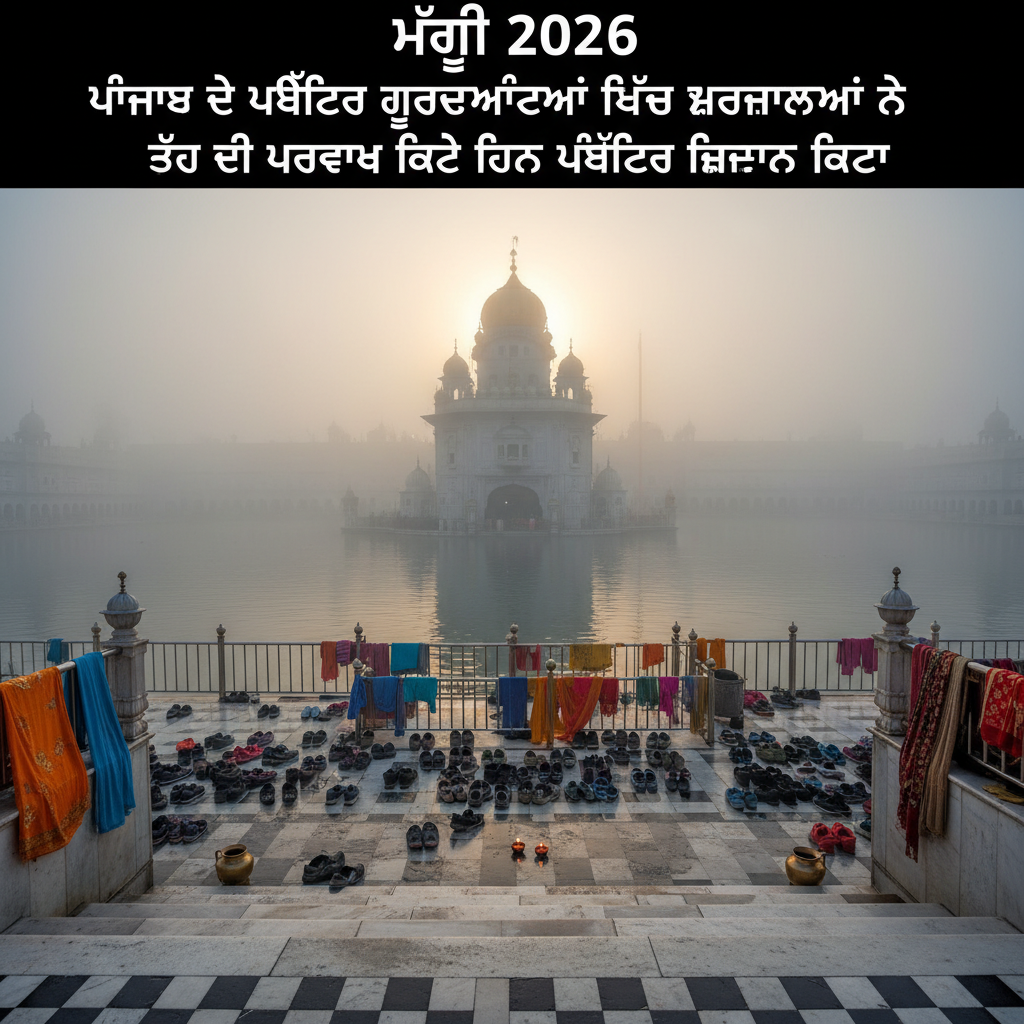
Tens of thousands of Sikh devotees converged at gurdwaras across Punjab and Haryana on January 14, 2026, to mark Maghi with ritual baths in sacred sarovars, despite dense fog and biting cold conditions. The festival, which coincides with Makar Sankranti, holds profound religious and historical significance for the Sikh community.
At the Golden Temple in Amritsar, devotees began assembling well before sunrise, with many staying overnight on the temple premises to ensure they could take the holy dip at the earliest hours of the auspicious day. The sight of thousands immersing themselves in the sacred waters of the sarovar, shrouded in dense fog, created a spiritually charged atmosphere that exemplified the deep faith of the pilgrims who braved the harsh weather.
The most significant gathering took place at Sri Muktsar Sahib, where the Punjab government declared a local holiday on January 14 to facilitate the Maghi Mela celebrations. This location holds particular importance as it commemorates the forty Sikhs known as Chalis Mukte who sacrificed their lives fighting Mughal forces alongside Guru Gobind Singh in the Battle of Khidrana in 1705. The festival's name derives from the fact that these martyrs were cremated on the first day of the month of Magh.
Punjab Chief Minister Bhagwant Singh Mann paid obeisance at Gurdwara Sri Tuti Gandi Sahib in Muktsar, addressing devotees who had gathered for the sacred occasion. Tight security arrangements were in place throughout the district to ensure smooth conduct of the massive religious congregation. The traditional horse and cattle fair, known as the legendary Ghora Mandi, drew thousands of breeders and traders from across Northern India, adding a cultural dimension to the religious festivities.
The ritual of taking a holy dip in the sarovar is considered spiritually purifying by devotees, who believe it cleanses one's karma and brings blessings for the year ahead. At every gurdwara across Punjab and Haryana, langars were organized as part of the tradition of selfless service that defines Maghi celebrations. Community kitchens served traditional dishes including rauh di kheer, a special preparation where rice is cooked in sugarcane juice and served cold with red chili-mixed curd.
Haryana Chief Minister Nayab Singh Saini, speaking at the Maghi fair, emphasized the historic bond between Haryana and Punjab, stating that Haryana's people are bound to help Punjab. The festival transcends state boundaries, with devotees from Haryana, Himachal Pradesh, and Jammu also participating in the celebrations, reflecting the pan-regional appeal of this harvest festival.
The timing of Maghi, falling on the first day of the traditional Punjabi month of Magh when the sun enters Capricorn, marks an auspicious period in the agricultural calendar. For farming communities across Punjab and Haryana, it represents both thanksgiving for the harvest and a spiritual renewal as winter begins its transition toward spring. The sight of kites dotting the sky added festive color to the solemn religious observances, symbolizing joy and prosperity.
As the day progressed and the fog lifted, the true scale of the gatherings became apparent, with pilgrims continuing to arrive at various gurdwaras throughout Punjab. The blend of historical remembrance, religious devotion, and cultural celebration that characterizes Maghi demonstrates the enduring vitality of Punjabi traditions in contemporary India, drawing generations together in shared reverence and community spirit.